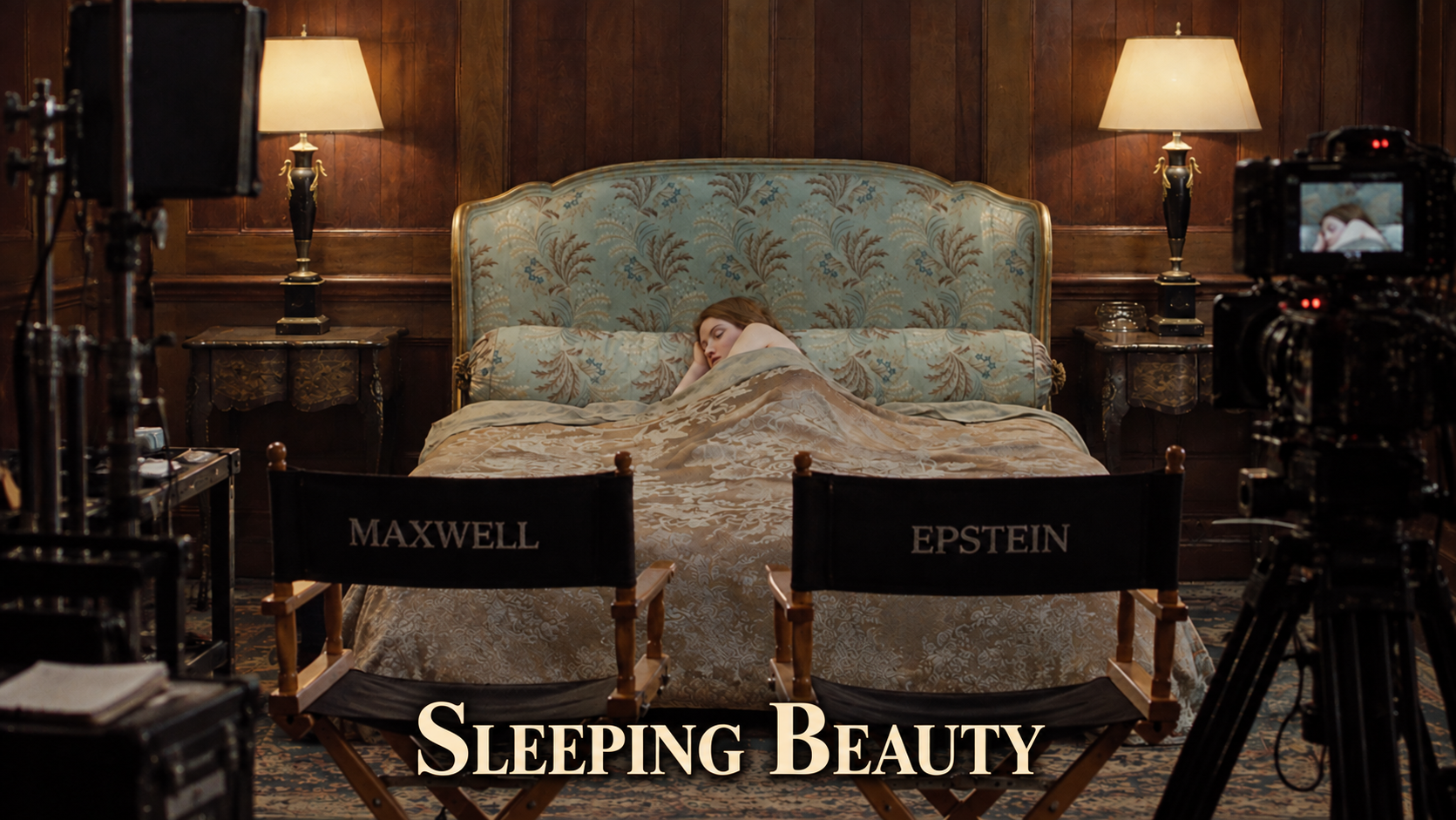
EMILY BROWNING SYNDROME
Laughable. Comical. Silly. Idiotic. And, above all, pretentious.
If all the world is a stage, and every night a prostitute puts on a performance for money, does placing a camera in the room suddenly make her an actress?
Does the camera make the transaction something else?
And if, afterward, she sits before a reporter and explains the symbolism — yin and yang, light and darkness, submission and power, whatever intellectual wrapping one wishes to place around it — does that change what actually occurred?
That is the problem I have with Sleeping Beauty.
I vaguely remembered Emily Browning from the delightful Lemony Snicket’s A Series of Unfortunate Events.
Watching this, the title suddenly feels prophetic.
Because Sleeping Beauty seems desperately determined to convince the audience that something profound is taking place merely because something degrading has been photographed beautifully.
Take away the lighting.
Take away the expensive room.
Take away the solemn pauses, the carefully composed frames, the interviews explaining what everything supposedly represents.
What remains?
A young woman is paid to lie passively in a bed while men exercise power over her.
Nothing profound about it — it has been taking place for millennia, all over the world.
The camera does not elevate that into philosophy.
If it did, we’d be handing out awards at the end of every performance in the world’s oldest profession.
That is where the film begins to resemble its own subject.
It asks the actress to surrender herself to a premise, then asks the audience to surrender its judgment to the word art.
The whole construction has the feel of a grotesque Hollywood fable: a Weinstein fantasy upstairs, a Maxwell figure doing the persuading downstairs, and everyone congratulating themselves because somebody remembered to call it cinema.
That is an analogy, not an allegation. But it captures what bothers me about the movie.
The machinery of persuasion becomes more interesting than the movie itself.
Someone had to convince Emily Browning that lying unconscious in that bed, while the camera records men approaching her, would communicate something so profound that the degradation was justified by the result.
And what exactly was the revelation?
That money can purchase submission?
That people perform for money?
That wealth permits grotesque indulgence?
That exploitation can occur in beautiful rooms?
Human beings worked those propositions out several thousand years ago.
There is nothing particularly daring about rediscovering prostitution and photographing it through an expensive lens.
Imagine a magnificent automobile going to auction.
It is rare. Beautiful. Valuable.
Now imagine that immediately after the sale somebody sets it on fire — deliberately — and then gathers a panel of critics to explain that the destruction represents mortality, capitalism, desire, possession, light and darkness.
One may call that art.
One may also reasonably ask whether somebody just destroyed a beautiful automobile to make a painfully obvious point.
That is how Emily Browning feels in this film.
Not transformed.
Not elevated.
Spent.
And that leaves me with the one genuinely interesting question raised by Sleeping Beauty:
How does an intelligent, accomplished young actress become convinced that surrendering herself to something this hollow constitutes artistic transcendence?
There should be a name for that particular Hollywood condition — when pretension becomes so thick that everyone involved mistakes degradation for profundity simply because the camera is expensive and the room is quiet.
There is now.
Emily Browning Syndrome.
EBS.
The condition in which ordinary exploitation acquires a beautiful frame — and everyone in the room agrees to call the frame art.